




The MDCAT (Medical and Dental College Admission Test) is one of the most crucial exams for students aiming to pursue medical education in Pakistan. As the competition intensifies, effective preparation becomes essential. But how can you ensure that you’re fully prepared for the test format? In this article, we’ll break down everything you need to know about the MDCAT test format, offering strategic insights on how to plan your preparation effectively. Whether you’re just starting or looking to refine your strategy, this guide will help you ace your MDCAT preparation.
Understanding the MDCAT Exam Structure
The MDCAT exam assesses a student’s grasp over various subjects, particularly focused on the knowledge areas needed for medical and dental studies. Understanding the structure of the test is the first step towards effective preparation. Here’s a quick overview of the MDCAT test format:
1. Subjects Covered in the MDCAT
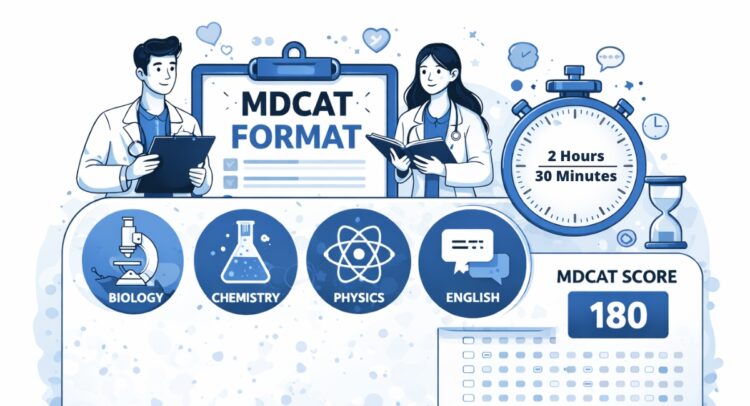
The MDCAT exam consists of four main subjects:
- Biology (60 questions)
- Chemistry (60 questions)
- Physics (44 questions)
- English (20 questions)
Each section tests fundamental knowledge as well as critical thinking and problem-solving abilities.
2. Total Number of Questions
The MDCAT exam contains 180 multiple-choice questions (MCQs) in total.
3. Test Duration
The exam duration is 2 hours and 30 minutes. Time management is essential, as you will need to answer all 180 questions in a limited timeframe.
4. Scoring System
The total score for the MDCAT exam is 200 points, with each correct answer awarded 1 mark. Incorrect answers generally receive no penalty, but it’s important to answer strategically, focusing on questions you’re most confident about.
5. Marking Scheme
- Correct Answer: +1 mark
- Incorrect Answer: 0 marks (no negative marking)
- Unanswered Questions: 0 marks
6. Breakdown of the Questions
Here’s a breakdown of the total questions in each subject:
- Biology: 60 questions
- Chemistry: 60 questions
- Physics: 44 questions
- English: 20 questions
This distribution means that the majority of the test focuses on the core science subjects, which require more in-depth understanding and preparation.
How to Strategize for MDCAT Test Preparation
Now that you have an understanding of the MDCAT exam structure, let’s dive into how you can efficiently prepare for the test.
1. Create a Comprehensive Study Plan
A well-structured study plan is crucial for success in the MDCAT. Here’s a step-by-step guide to help you create an efficient study plan:
- Divide the subjects: Prioritize your weaker subjects while ensuring all subjects are given attention.
- Set daily goals: Allocate daily goals for each subject, such as 10 Biology questions, 10 Physics problems, and so on.
- Time-blocking: Use the time-blocking method to dedicate specific hours of the day for each subject. This allows for focused and uninterrupted study sessions.
- Review regularly: Set aside time each week to review what you’ve studied. Use revision notes and past papers to reinforce learning.
2. Focus on High-Yield Topics
Each subject in the MDCAT has topics that are frequently tested. By focusing on high-yield areas, you can maximize your preparation. For instance:
- In Biology, focus on Human Physiology, Cell Biology, and Genetics, as these topics are heavily emphasized.
- In Chemistry, Organic Chemistry, Chemical Bonding, and Atomic Structure tend to have more weight.
- In Physics, focus on Mechanics, Thermodynamics, and Modern Physics.
- In English, concentrate on vocabulary, comprehension, and grammar.
3. Utilize MDCAT Study Materials
TopGrade.pk offers comprehensive MDCAT study materials, including video lectures, revision notes, practice papers, and a dynamic question bank. Here are the benefits of using TopGrade’s resources:
- Comprehensive Coverage: All subjects are covered with concise notes and explanations.
- Interactive Learning Tools: Engage with practice tests and quizzes for instant feedback.
- Adaptive Learning: Materials adapt to your progress, helping you stay on track.
4. Practice with Past Papers
Past MDCAT papers are one of the best ways to understand the exam format and the types of questions that are asked. By practicing past papers, you can:
- Familiarize yourself with the exam pattern.
- Identify key topics that are frequently tested.
- Improve your time management by simulating exam conditions.
5. Take Timed Mock Exams
Taking full-length, timed mock exams is an excellent way to practice for the real test. Mock exams help you:
- Get used to the exam’s time constraints.
- Build stamina for the long duration of the exam.
- Analyze your strengths and weaknesses to refine your strategy.
6. Review Mistakes and Learn from Them
Mistakes during practice are invaluable learning opportunities. After each mock test or practice session, review your incorrect answers carefully and understand why you made those errors. This will prevent you from repeating the same mistakes in the actual exam.
7. Stay Consistent and Motivated
Consistency is key when it comes to MDCAT preparation. Set realistic goals, and stay motivated by tracking your progress. Join online study groups or connect with friends who are also preparing for the MDCAT. This will help you stay accountable and share useful tips and resources.
TopGrade’s Role in Your MDCAT Test Preparation

TopGrade.pk is dedicated to making MDCAT preparation easy, structured, and effective. With tools designed based on real student feedback, TopGrade provides:
- Daily Study Routines: Structured, easy-to-follow study plans tailored to your needs.
- Adaptive Learning: Your study routine adapts based on your progress, ensuring that you’re focusing on the right areas.
- Expert Faculty Support: Access expert faculty who provide clear explanations and study tips, making difficult concepts easier to grasp.
- Trackable Progress: Monitor your progress with quizzes, past papers, and feedback loops to ensure you’re on track to success.
Conclusion
MDCAT preparation requires a strategic approach, discipline, and smart time management. By understanding the test format and creating a targeted study plan, you can approach the exam with confidence. Whether you use resources like TopGrade.pk or practice past papers, the key is to stay consistent and make steady progress.
Remember, MDCAT is not just a test of knowledge but also of strategy. With the right approach, you can ace it and secure a spot in your desired medical school.
Frequently Asked Questions
1. How long should I prepare for the MDCAT?
Ideally, you should start preparing for the MDCAT at least 6 months before the exam to ensure you have enough time to cover all subjects thoroughly.
2. What is the best strategy for the MDCAT English section?
Focus on vocabulary, reading comprehension, and grammar. Practice by reading English articles, solving grammar exercises, and working through past papers.
3. Can MDCAT preparation affect my FSc studies?
TopGrade’s adaptive learning system ensures that MDCAT preparation complements your FSc studies without overwhelming you. By following a structured plan, you can balance both.
4. How important are mock exams for MDCAT?
Mock exams are crucial for practicing time management, simulating real exam conditions, and identifying areas that need improvement.
5. What are the most important topics in MDCAT Chemistry?
Focus on Organic Chemistry, Chemical Bonding, and Atomic Structure as these topics are frequently tested in the exam.